
The Big City Retirement Trap
-
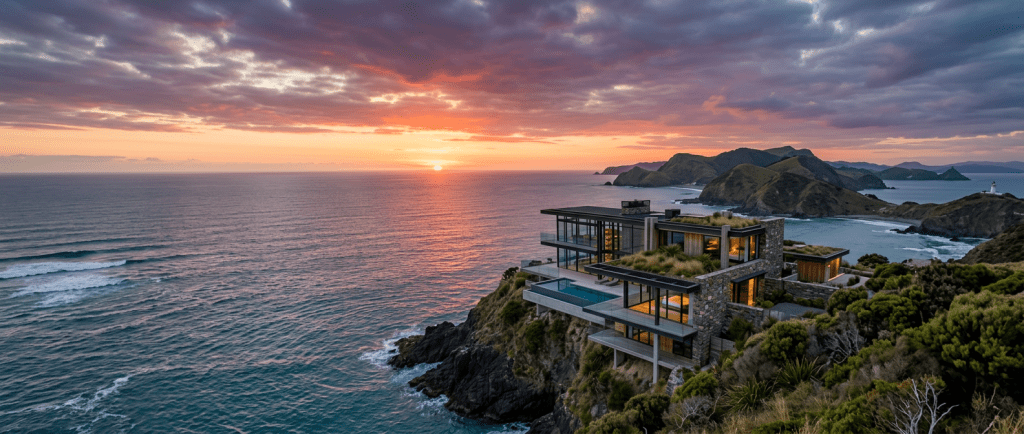
A stunning modern house perched on a cliff overlooking the ocean at sunset – your next move?
Is Your “Plan B” Logistically Sound?
In this post, we run a cold-eyed logistical audit on eight small New Zealand towns, stripping away the tourism brochures to evaluate:
- The Golden Hour: Which towns sit dangerously outside the survivable threshold for Level 1 trauma care?
- The “Sunshine Tax”: Where lifestyle migration has dangerously decoupled property values from local economic realities.
- Geological Debt: The active fault lines, volcanic risks, and liquefaction zones hiding beneath postcard-perfect views in spots like Napier and Blenheim.
- Isolation by Default: Why subtropical paradise in the Far North or alpine luxury in Wanaka might leave you entirely cut off when the grid fails.
Your retirement isn’t about the view; it’s about what survives beneath that view when the roads close.
Metropolitan centers across New Zealand face severe infrastructure liabilities, including massive daily water leaks in Auckland and high earthquake risks in Wellington. Retirees should evaluate moving destinations based on logistical survival metrics rather than visual appeal or local cafés.
Oamaru provides cheap historic housing and stable hydro power, yet it sits dangerously far from a primary trauma center. Whakatane features high annual sunshine hours, although its proximity to an active volcano introduces significant geological risk. Major medical trauma in Whakatane requires a drive of nearly three hours to Hamilton, which exceeds safe emergency timelines.
Cambridge offers highly secure retirement conditions due to its position within a massive, economically productive agricultural zone. Retirees in Cambridge enjoy rapid twenty-minute access to a major hospital alongside a very low risk of earthquake damage. High real estate entry costs in Cambridge reflect these premium defensive assets and excellent infrastructure connections.
Nelson attracts wealthy lifestyle migrants with excellent weather, yet this migration artificially inflates housing prices beyond local economic fundamentals. Transport infrastructure in Nelson remains fragile, as regional highway networks are highly vulnerable to seismic events. Blenheim stands out as a premier wine production hub, though it features severe logistical isolation risks. The Kaikoura earthquake demonstrated how easily Blenheim can be cut off from essential South Island supply chains.
Wanaka serves as an incredibly expensive alpine sanctuary for global elites looking to hedge against systemic disasters. Localized hydro assets give Wanaka strong energy independence, while narrow mountain passes present a major risk of physical isolation. Reclaimed land in Napier leaves the beautiful Art Deco town highly susceptible to destructive ground liquefaction. Extreme weather events like Cyclone Gabrielle have previously knocked out power and entirely isolated Napier from the national grid.
Kerikeri delivers a highly productive subtropical climate for northern retirees who want an unhurried lifestyle. Severe road vulnerabilities mean routine flooding can instantly cut off Kerikeri, spiking commodity prices and trapping residents. Power grids at the geographic tail-end of Northland experience documented unreliability and high storm vulnerability.
Prospective buyers must audit council hazard maps and medical evacuation windows instead of relying on scenic tourism brochures.
Watch the full video on Youtube – https://youtu.be/gHZnLkIJvJE
6 New Zealand Beaches That Feel Like Fiji (Without Leaving the Country)
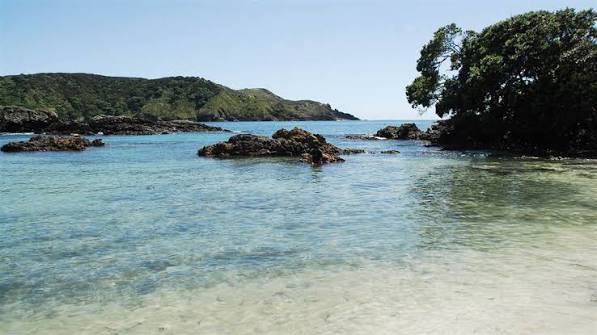
Dreaming of turquoise water, white sand and secluded bays but not the international airfare? New Zealand hides remarkable coastal destinations that rival tropical islands. From Northland’s warm waters to the Abel Tasman’s golden beaches, these six locations offer unforgettable escapes.
Maitai Bay on the Karikari Peninsula is one of the country’s warmest swimming beaches. Its twin horseshoe bays, calm turquoise water and white sand create an atmosphere more reminiscent of the South Pacific than mainland New Zealand. Beyond the scenery, visitors discover a powerful conservation story. A community-led rāhui has helped restore marine life, proving that local stewardship can revive damaged ecosystems.
New Chums Beach on the Coromandel remains one of New Zealand’s last truly wild beaches. Reached only by foot across an estuary at low tide, the beach has no roads, cafés or commercial development. The reward is pristine sand backed by native forest and one of the country’s most spectacular viewpoints. Its ongoing conservation battle also reminds visitors that paradise requires protection.
Near Cape Reinga, Tapotupotu Bay combines dramatic scenery with deep Māori cultural significance. Just minutes from Te Rerenga Wairua, where Māori tradition says spirits begin their final journey, the bay offers excellent camping, warm summer water and access to one of New Zealand’s finest coastal walks.
Offshore, the Poor Knights Islands Marine Reserve is internationally renowned. Jacques Cousteau ranked it among the world’s finest dive destinations. Exceptional visibility, volcanic caves and abundant marine life make it a bucket-list destination for divers and snorkellers alike, while decades of protection demonstrate the benefits of marine reserves.
Awaroa Bay in Abel Tasman National Park is famous as ‘the People’s Beach’. In 2016, thousands of New Zealanders collectively purchased the beach to ensure it remained public forever. Golden sand, clear water and forested surroundings make it one of the country’s most iconic coastal experiences.
Finally, Rakino Island offers an off-grid escape only 45 minutes from Auckland by ferry. With no shops, restaurants or resorts, visitors experience simple island living, quiet beaches, kayaking and panoramic Hauraki Gulf views.
These destinations share more than beautiful scenery. Each highlights the importance of conservation, community involvement and responsible tourism. Visitors can help preserve them by respecting local rules, following Leave No Trace principles and supporting local communities.
Whether you enjoy camping, hiking, diving or simply relaxing beside crystal-clear water, these six destinations prove that you do not need to travel overseas to experience a tropical-style holiday. New Zealand’s own coastline delivers world-class beaches, extraordinary wildlife and unforgettable experiences that rival many Pacific islands
Watch the full video on Youtube – Click Here!

